





Published December 2, 2025
The history of the Partnership

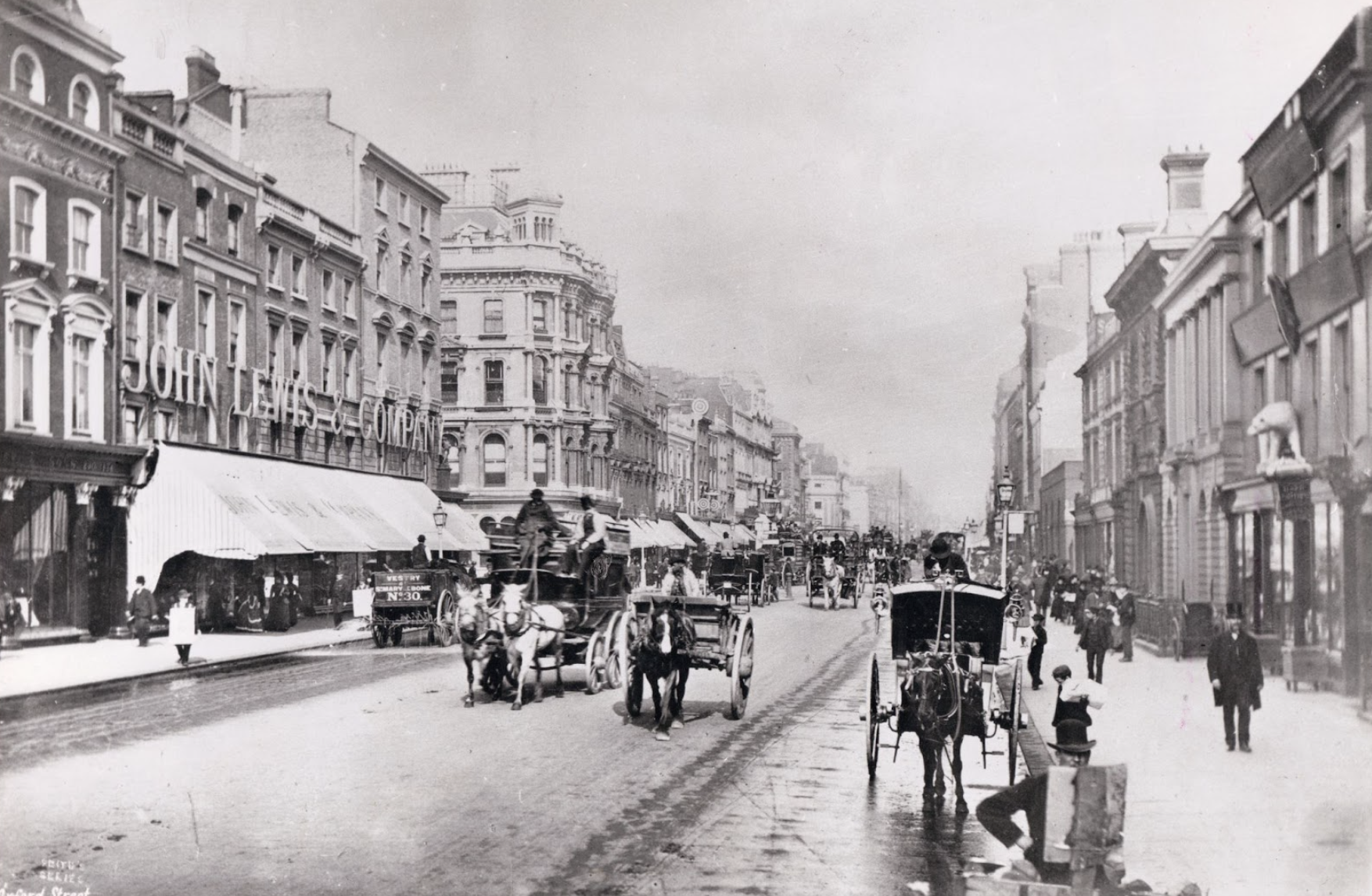


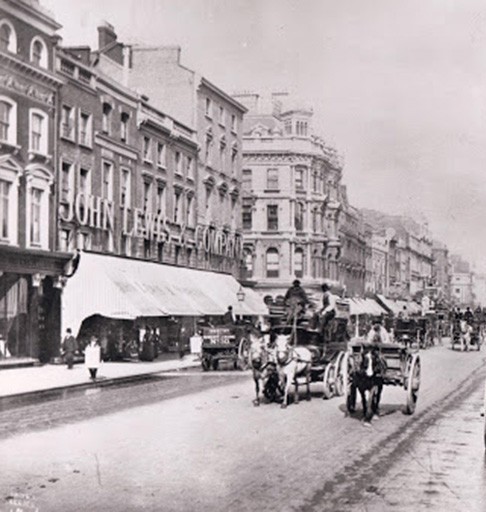
The first John Lewis…
John Lewis Senior was born in Shepton Mallet, Somerset, in 1836. His parents died while he was a child and he was brought up largely by his aunt, Ann Speed. At 14 he was apprenticed to a local draper and, by the age of 20, he had moved to London and was working in Peter Robinson’s shop in Oxford Circus. He soon became the youngest silk buyer in the capital.
In 1864, John Lewis then opened his own small draper’s shop on Oxford Street in London. He took the grand total of 16s 4d (82p) on his first day. Even from its early days though, the business began to grow. He soon expanded into neighbouring properties and rebuilt much of the shop in the 1880s.
His trading policy was simple – a wide assortment, low margins, and fair dealing – and ironically (considering how big John Lewis Christmas adverts now are) he never advertised.
In 1884, John Lewis. Senior married Eliza Baker, a teacher who had been one of the first women to attend Cambridge University. They had two sons, John Spedan, who was born in 1885 and and Oswald, born in 1887.
Both boys followed their father into the family business after leaving education, but it was John Spedan in particular who began to see things differently.
By the time Spedan reached his 21st birthday, John Lewis Senior now controlled two shops; his original one on Oxford Street and Peter Jones in Sloane square which is still part of the business today.
At this coming of age, Spedan received a quarter share in his father’s business, valued at £50,000, which entitled him to a quarter of the profits of the Oxford Street shop. Shortly afterwards he also became a director of Peter Jones Ltd. Oswald received a similar share on his coming of age. The two younger Lewises encouraged the shop staff to take an interest in sport and started a staff magazine, the Byron Quarterly.
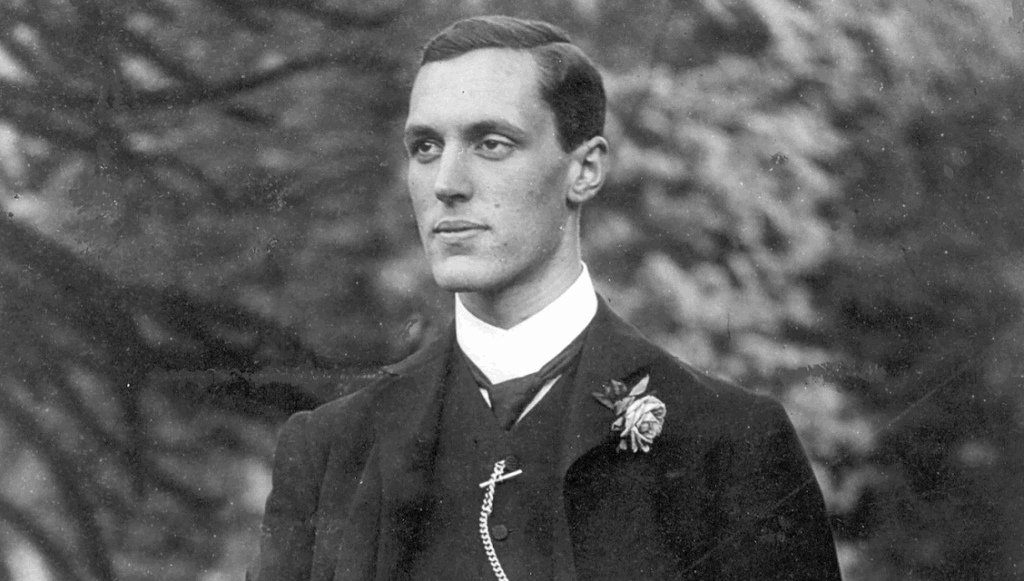
Revolutionary Ideas
It wasn’t long before Spedan became uneasy that he, his brother and his father were receiving more income from the family business than all their employees put together. After a riding accident forced him to have two operations and a long period of recovery, he thought deeply about his own future and that of the business. He was eager to share his profits with his staff and to redistribute money which was being kept in reserve.
In order to do this, Spedan decided he would have to make the business into a limited liability company, distributing the profits to the employees in the form of shares in proportion to their pay. His father’s reaction to this suggestion – and to his inevitable smaller share of the retained profits – was somewhat negative.
The Experiment
It was in 1914 that John Lewis Senior handed over the entire managerial control of the Peter Jones shop to Spedan, who became the shop’s chairman and its nominal managing director. He was then free to start putting his forward-thinking ideas into practice. However, his father made him continue to work until 5pm at the Oxford Street shop, and the Peter Jones business was doing badly.
Spedan’s first move was to shorten the working day by an hour and to start a departmental system of commission. He also set up the staff committees in which elected representatives held regular meetings with him in the absence of their managers. This system is still in operation.
Spedan had a serious disagreement with his father in 1916 that was to shape the future of the John Lewis Partnership. He withdrew from active participation in the Oxford Street shop and swapped his quarter-share of the business for his father’s controlling holding in the capital of Peter Jones Limited.
Over the next few years he made further changes at Peter Jones, giving the staff a third week’s holiday, taking on unusually well educated people for management posts, and starting The Gazette (our internal news publication which is still published in the Partnership today).
In 1919 he set up a staff council (the forerunner of today’s Partnership, Divisional and Branch Councils). His employee-ownership and democratic business model ideas were starting to flourish and Peter Jones was commercially, all the better for it.
Family & Business
Spedan Lewis married Sarah Beatrice Mary Hunter in 1923. She was one of five women graduates recruited as buyers the previous year and became deputy chairman of the Partnership after their marriage. They had three children: John, who sadly died as a child, Jill (1927-68) and Edward (1929-2008).
Spedan’s mother died in 1924 and the long disagreement between him and his father was made up. In 1926, Oswald gave his brother his share in the Oxford Street shop, and control of both stores passed to Spedan, although his father was still very much involved with the day-to-day running of the business. Spedan immediately started to apply his ‘Partnership’ ideals to the Oxford Street shop as well, and bought the Odney Club at Cookham, Berkshire, in the same year (one of 5 Partnership hotels that we still enjoy today).
John Lewis Senior died in 1928, aged 92, leaving Spedan sole owner of both stores. He expanded his shop still further down Oxford Street. He also converted the John Lewis firm into a public company – John Lewis and Company Limited – creating capital for expansion.
The Partnership is Born
On 18 April 1929 Spedan Lewis signed the First Trust Settlement, transferring his own shares in John Lewis Ltd, Peter Jones Ltd and the Odney Estate to a board of trustees on behalf of the Partners. He also created the John Lewis Partnership Limited.
In return he would receive bonds worth £1 million over the following 30 years. He retained complete practical control but took no more income from the business.
Twenty-one years later, on 26 April 1950, Spedan signed the Second Trust Settlement, effectively ‘giving’ the Partnership to the people who work in it. By this act he transferred all his remaining shares and his ultimate control to the trustees. The John Lewis Partnership expanded during the remainder of the 20th century into the business we know today.
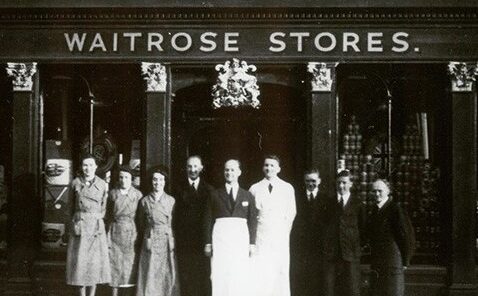
Waitrose Joins the Partnership
The Partnership bought Waitrose Ltd in October 1937. At the time it was a London-based family business with 10 grocery and provisions shops employing 164 staff. Wallace Wyndham Waite, who had opened his first shop with Arthur Rose and David Taylor in 1904, was still in charge.
The three men had started trading in Acton, west London. Their original shop soon expanded, and reopened in much larger premises in 1908, selling everything from fish to flowers. By 1920 there were more than 20 Waitrose shops throughout London and the Home Counties, but many shops had closed by 1930 after a decade of more difficult trading conditions.
The Partnership was attracted to Waitrose, said Spedan Lewis, by its ‘high reputation not only for the quality of its goods but also for the way in which it has been built up… It is no secret that many provision shops… have owed a good deal of their success to the bribing of servants of their customers. Messrs Waitrose Limited have never used any such methods.’
We All Own It
From a small drapers shop on Oxford Street to truly revolutionary ideas, the John Lewis Partnership today stands as a profound testament to the foresight of Spedan Lewis and his belief that a better way of doing business could be found. One that benefits its Partners, customers, suppliers and the world as a whole.
In an ever-changing 21st-century retail landscape, this enduring model of ownership remains our deepest strength. It is a structure where every individual is a Partner, with a shared stake in the collective future. This spirit, forged through a history of overcoming challenges, ensures that the Partnership, gifted by its founder to the people who work in it, remains strong, resilient, and ready to face the future and is anchored in unwavering conviction of our unique purpose – Working in Partnership for a Happier World.








Related Vacancies



We have 64 roles currently live across all locations and teams.
See All Live Roles